
Religion, Reason, Aesthetics and Knowledge Production
Interdisciplinary inquiry into Indian knowledge traditions: plurality, critique, cultural encounter, aesthetics, gender and method.
About the Programme
Indian intellectual traditions encompass diverse ways of knowing, thinking, interpreting, and engaging with the self, society, and politics. They include philosophical inquiry, religious and ethical reflection, literary and aesthetic practices, vernacularisation, ritual practices, social norms, political formations, and processes of community-building and contestation.
This five-day Faculty Development Programme explores these traditions through an interdisciplinary lens. Bringing together perspectives from political thought, religious studies, Sanskrit and Persianate studies, literary and gender studies, and research methodology, it examines knowledge not as a single, unchanging inheritance, but as an ongoing process of interpretation, exchange, negotiation, contestation, and renewal.
Read more
These traditions have evolved through oral and performative traditions, the creation and reinterpretation of stories and myths, literary production, intellectual exchange, and the formation of social and cultural networks. They have been shaped by sustained debates, internal critiques, institutional transformations, and encounters among different intellectual and cultural worlds. The growth of vernacular literary traditions, in particular, opened new spaces for the circulation of ideas, the expression of social experience, and the reconfiguration of cultural and political relationships.
Contemporary interest in Indian knowledge traditions raises important questions. In a world shaped by artificial intelligence, environmental crises, and ongoing wars, what can a critical engagement with these traditions contribute to the humanities and to our understanding of contemporary social and political life? At a time when religion occupies a significant place in many public debates and conflicts, how might a deeper understanding of religious and intellectual traditions contribute to dialogue, coexistence, and peace?
Moving beyond an understanding of Indian knowledge as either a homogeneous system or merely a collection of classical texts, the programme explores how knowledge is produced and transmitted through vernacular traditions, religious critique, aesthetic experience, literary interpretation, social practices, and cultural encounters. Religion, in particular, is considered not simply in terms of belief, ritual, or doctrine, but also as a possible resource for ethical reflection, social critique, and the questioning of rigid boundaries. Rather than simply celebrating the past, the programme seeks to understand traditions critically and historically, and to explore their continuing relevance to the challenges of the present.
Disciplines in dialogue
Who should attend
Faculty members, research scholars and postgraduate students in the humanities and social sciences interested in teaching and researching Indian knowledge traditions.
Central Questions
- Can Indian knowledge be understood as a single, unified system, or is it better understood through the plurality of intellectual traditions that have developed across the Indian subcontinent?
- How have these traditions produced knowledge and cultivated particular ways of thinking and living?
- How have they negotiated and contested forms of authority when traditions and institutions became rigid or exclusionary?
- How have internal debates and encounters with other traditions transformed existing traditions and given rise to new ones, including religious traditions?
Each resource person explores these questions from a distinct disciplinary perspective, enabling participants to examine the relationship between knowledge, religion, reason, aesthetics, gender, and social life, and to ask critically what is meant by “Indian Knowledge System”.
Objectives
Develop a broad and historically informed understanding of the plurality of Indian intellectual and knowledge traditions.
Examine the relationship between knowledge, religion, reason, aesthetics, and social life.
Explore how intellectual traditions challenge rigid authority and how critical ideas may themselves become institutionalised.
Understand the role of cultural encounters, translation, and intellectual exchange in shaping knowledge traditions across the subcontinent.
Examine Sanskrit aesthetic theory, vernacular intellectual traditions, and classical narratives as sites of knowledge production.
Introduce interdisciplinary research approaches: comparative analysis, textual interpretation, ethnography, fieldwork, and oral and performative traditions.
Encourage participants to develop critical and context-sensitive approaches to teaching and researching Indian knowledge traditions.
Programme at a Glance
Five sessions, one thread: each day approaches Indian knowledge traditions from a different disciplinary angle.
Sessions & Resource Persons
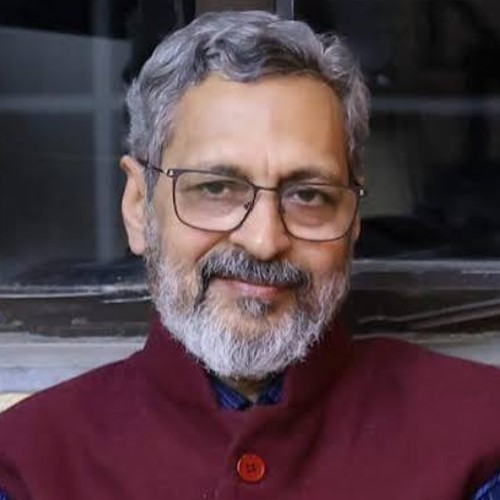 Resource Person
Prof. Manindra Nath Thakur
Centre for Political Studies, Jawaharlal Nehru University
What Is the Indian Intellectual Tradition? Plurality, Dialogue and the Production of Knowledge
The opening session establishes the conceptual and historical foundations of the programme. Drawing on his scholarship on Indian intellectual traditions, including his work as an editor of a volume on Indian knowledge published by Routledge, Prof. Thakur introduces the diversity of intellectual traditions that have shaped knowledge in the Indian subcontinent.
Read full abstract
The session will examine whether Indian knowledge can be understood as a unified system or whether it is better approached as multiple, historically situated traditions. It will explore the relationship between knowledge and society, the plurality of intellectual practices, and the possibilities of dialogue among different epistemological frameworks.
The discussion will also consider how Indian intellectual traditions have developed through debates, disagreements, reinterpretations, and encounters with other traditions. By establishing this broad framework, the session will introduce the central concerns of the FDP and prepare participants for the questions of religion, aesthetics, cultural interpretation, and research methodology addressed in the following sessions.
 Resource Person · Coordinator
Dr. Rajeev Kumar
Director, Umran Academic Research Association
Beyond Mysticism and Ritualism: Religion, Critique and Cultural Encounters in Indian Knowledge Traditions
Religion occupies a significant place in the intellectual history of South Asia, yet it is often reduced to belief, ritual, dogma, or theological doctrine. This session reconsiders the place of religion in the production of knowledge, examining how religious traditions can provide resources for questioning established authority, challenging social hierarchies, and rethinking the relationship between knowledge and everyday life.
Read full abstract
Some influential European representations of India have portrayed its intellectual traditions as primarily religious or mystical, obscuring the diverse forms of reasoning, literary expression, aesthetic reflection, social critique, and intellectual exchange that have shaped its history. The session will also consider why scholars sometimes hesitate to engage with religion as an object of critical inquiry and how a broader understanding of religion can open new avenues for studying intellectual and social change.
Kabir offers a particularly important point of entry. His poetry questions caste hierarchy, ritual authority, religious boundaries, and established claims to spiritual legitimacy. Through Kabir, the session explores how vernacular expression can become a form of intellectual critique and how religious traditions can generate alternative ways of thinking about society, authority, and human relationships.
The session also foregrounds cultural encounters in the making of Indian knowledge traditions. From the relationships among Vedic, Buddhist, and other philosophical traditions to later interactions involving Islamicate intellectual worlds, South Asian knowledge has developed through debate, translation, adaptation, and exchange. These encounters have not always been harmonious; they have also involved unequal power, conflict, and contestation.
Institutions and established authorities are not inherently oppressive: they can sustain collective life, transmit knowledge, and provide continuity. But when institutions become rigid, exclusionary, or oppressive, traditions may generate internal critiques and alternative ways of thinking and living, which can themselves produce new boundaries. Kabir’s critique of religious and social authority, and the later institutionalisation of Kabirpanth, offer a way to examine these processes.
Drawing on textual interpretation, ethnographic engagement, and critical approaches to religion, the session asks how studying these processes can deepen our understanding of Indian knowledge traditions and contribute to more reflective forms of dialogue, coexistence, and social harmony.
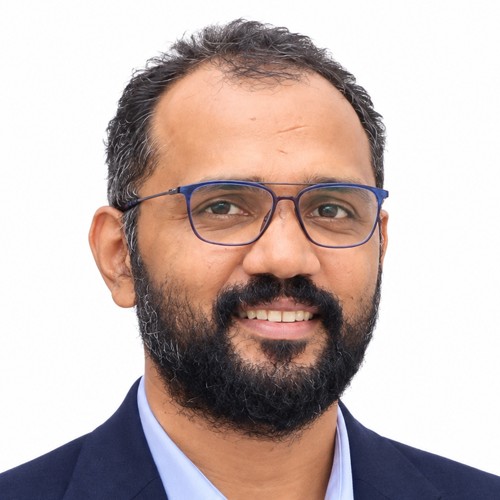 Resource Person
Manu M. R.
Sree Neelakanta Government Sanskrit College, Pattambi
Beyond Grammar: Sanskrit, Rasa and the Cultivation of Sensibility
Sanskrit’s significance cannot be understood through grammar, textual preservation, or philosophical abstraction alone. Its aesthetic traditions offer sophisticated ways of thinking about experience, emotion, perception, interpretation, and the cultivation of sensibility. This session explores Sanskrit, literary theory, and knowledge production, with particular attention to rasa and the framework of the Natyashastra.
Read full abstract
Through an engagement with aesthetic theory, the session will examine how poetry, drama, and artistic experience shape human perception and cultivate forms of sensitivity and understanding. It considers aesthetic experience as an important dimension of intellectual life, opening up ways of knowing that cannot be reduced either to abstract reasoning or to religious and mystical experience.
The session will also question the tendency to characterise Indian intellectual traditions as predominantly mystical. By focusing on rasa, it will show how aesthetic traditions contribute to a broader understanding of Indian knowledge beyond the boundaries of grammar, philosophy, or religious doctrine.
 Resource Person
Dr. Insha Qayoom Shah
Assistant Professor, Department of English Literature, Chandigarh University
Reading the Mahabharata Again: Gender, Power and Women’s Agency
Classical narratives are not static repositories of cultural meaning; they are repeatedly interpreted, contested, and reworked. Feminist engagements with the Mahabharata offer an opportunity to examine how inherited narratives represent gender, authority, power, and women’s agency, and how revisionary readings bring marginalised perspectives into view.
Read full abstract
The session will examine the relationship between narrative, social norms, gendered experience, and the production of knowledge. It will consider how contemporary readers can engage critically with inherited narratives without treating them either as unquestionable authorities or as texts with no continuing intellectual relevance.
By revisiting the Mahabharata through a gender perspective, the session demonstrates how traditions become sites of reinterpretation, debate, and intellectual renewal, and invites participants to reflect on how feminist readings illuminate contemporary questions of gender, power, and social relations.
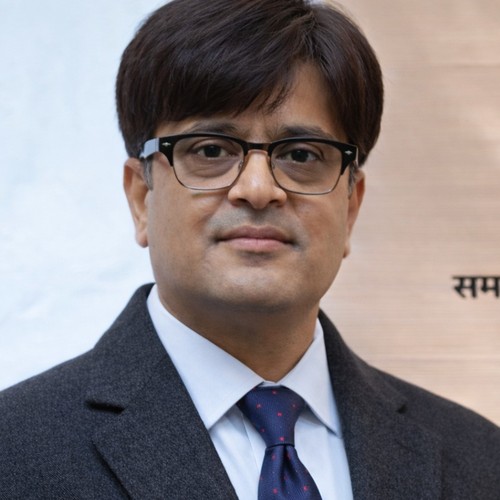 Resource Person
Dr. Rakesh Thakur
Associate Professor, Post Graduate Government College, Punjab University
How Do We Study Indian Knowledge Traditions? Comparative Approaches, Ethnography and Fieldwork
If knowledge is produced through classical texts, philosophical debates, vernacular poetry, oral traditions, aesthetic practices, religious institutions, and everyday social life, how should researchers approach these diverse sources? The concluding session introduces comparative analysis, textual interpretation, ethnography, fieldwork, participant observation, and the study of oral and performative traditions.
Read full abstract
The session will consider how researchers can engage with communities, institutions, songs, poetry, storytelling, and everyday practices as sites through which knowledge is transmitted, interpreted, and transformed.
It will also examine the possibilities and limitations of different methods. Comparative research can illuminate connections and differences among traditions, while ethnography and fieldwork reveal how knowledge operates in lived contexts. The study of languages, oral histories, and performance helps researchers recognise forms of knowledge not fully represented in formal textual archives.
Particular attention will be given to choosing methods suited to specific research questions. As the concluding session, it brings together the programme’s central concerns (plurality, critique, cultural encounters, aesthetics, gender, and lived traditions) and considers how these can inform future research and teaching.
Expected Outcomes
By the end of the programme, participants are expected to:
- Develop a historically informed understanding of the diversity of Indian intellectual and knowledge traditions.
- Recognise religion as a potential site of intellectual inquiry and critique, rather than only belief, ritual, or dogma.
- Understand the role of cultural encounters, translation, and exchange in the development of Indian intellectual traditions.
- Appreciate Sanskrit aesthetic theory and vernacular literary traditions as important forms of knowledge production.
- Engage critically with classical narratives through contemporary perspectives, including feminist approaches.
- Gain an introductory understanding of interdisciplinary methods for studying texts, communities, institutions, oral traditions, and social practices.
- Identify ways to bring critical and interdisciplinary approaches to Indian knowledge traditions into teaching, research, and academic discussion.
Concluding Rationale
Indian knowledge traditions are best understood not as a single, unchanging inheritance but as diverse intellectual formations that have been produced, interpreted, contested, and transformed over time.
By bringing together perspectives on political thought, religion, Sanskrit aesthetics, gender, and research methodology, this Faculty Development Programme creates an interdisciplinary space for examining how knowledge acquires meaning and authority, how traditions are challenged and reinterpreted, and how cultural encounters contribute to intellectual change.
Its central concern is not simply how to recover or preserve inherited traditions, but how to understand them critically and historically, encouraging a plural and reflective engagement that recognises their intellectual achievements, internal disagreements, and histories of cultural encounter, while exploring how they may contribute to more thoughtful forms of coexistence and social harmony in the present.
Programme Committee
Join the Programme
Five evening sessions online, 26 – 30 November, 8:30 – 10:00 PM IST. Open to faculty members, research scholars and postgraduate students.
Questions? Write to uara@umran.org.in