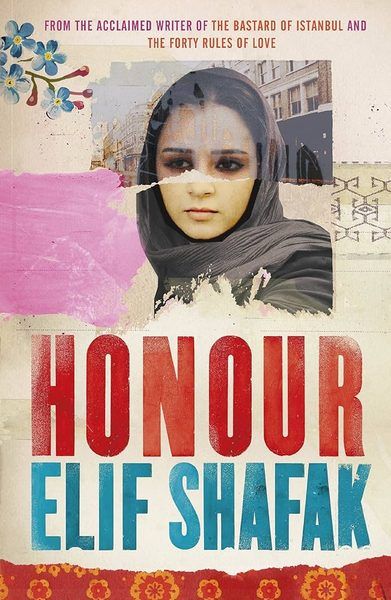
Honour by Elif Shafak
 Saalima Khan
PGT English; Research Scholar, Barkatullah University, Bhopal
~ 2 min read
Elif Shafak’s Honour is a testament to her storytelling prowess, blending intricate narratives with deep emotional resonance. The novel masterfully navigates between timelines and spaces, shifting from a remote village near the Euphrates to the bustling streets of England. Through this juxtaposition, Shafak delves into themes of cultural displacement, family loyalty, and the unseen emotional scars that traditions and customs leave behind.
One of Shafak’s greatest strengths lies in her ability to weave stories that are as complex as they are compelling. Shafak employs a nonlinear narrative structure, skilfully interspersing past and present events. This technique builds suspense while mirroring the fragmented nature of memory, illustrating how past experiences perpetually shape the present. Her lyrical prose is both evocative and poetic, making even the harshest realities resonate with haunting beauty.
The novel is enriched by multiple perspectives, offering insight into the minds of characters like Pembe, Adem, and Esma. Each character is intricately crafted, their voices distinct yet harmonized within the broader narrative. Particularly poignant is the portrayal of Iskender, whose concept of masculinity is shaped by societal norms and maternal influence. Shafak explores how women, like Pembe, unknowingly reinforce patriarchy by raising boys to suppress vulnerability, equating manhood with emotional detachment.
Shafak explores how women, like Pembe, unknowingly reinforce patriarchy by raising boys to suppress vulnerability, equating manhood with emotional detachment.
Cultural displacement is a recurring theme in Honour, as Shafak captures the lingering pull of one’s homeland. For Pembe and Adem, their migration to England is not an escape but a continuation of the societal norms and expectations they sought to leave behind. Similarly, the tension between modernity and tradition is a recurring theme, explored through the generational conflicts between parents and their children.
As the title suggests, the concept of honour is central to the narrative. Shafak critiques how deeply rooted patriarchal societies use the idea of honour to dictate actions and justify destructive behaviours. This theme is most tragically embodied in Iskender, whose perception of honour leads to devastating choices that ripple through his family.
Shafak’s language is richly symbolic, enhancing the novel’s thematic depth. The Euphrates River symbolizes the flow of life and memory, connecting characters to their roots, much like Jameela, a character who embodies strength, loyalty, courage, resilience, and sisterhood. Through Jameela, Shafak breathes life into the settings, drawing parallels between the serene yet stifling village near the Euphrates and the complexities of human relationships. Jameela’s unwavering dedication to her family and her ability to endure hardships reflect the resilience of the river itself—constant, life-giving, and unyielding. Her presence becomes a metaphor for the binding force of love and memory, grounding the narrative with her quiet yet powerful influence.
Shafak’s ability to balance intricate storytelling with universal themes of love, betrayal, and identity is unparalleled. The novel is not merely a story about a family torn apart by tradition and migration; it is a mirror reflecting the struggles of countless individuals grappling with the dualities of their heritage and their aspirations.
The novel is not merely a story about a family torn apart by tradition and migration; it is a mirror reflecting the struggles of countless individuals grappling with the dualities of their heritage and their aspirations.
Honour is a compelling read that lingers long after the final page. It is a reminder of the enduring power of memory and the indelible marks that culture and family leave on our identities.
Saalima Khan is a PGT, English language instructor and research scholar at Barkatullah University, Bhopal.