
November 17, 2026
The Crucible of Crisis
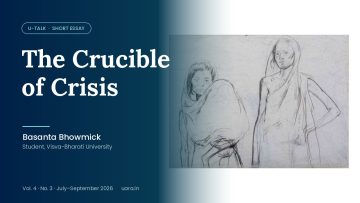
How the Bengal famine of 1943, driven by war and colonial policy failure, reshaped Bengali cuisine through famine foods like Kochu Shaak and Googli.
How the Bengal famine of 1943, driven by war and colonial policy failure, reshaped Bengali cuisine through famine foods like Kochu Shaak and Googli.

A Jaynagar village teacher, Ram Ashish Singh, explains Kabir dohe on idol worship and mosque orthodoxy, and lives Kabir's message of love and harmony.
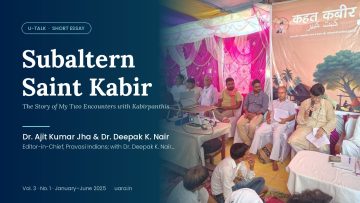
Ajit Kumar Jha recalls meeting Kabirpanthis at a California Kabir temple and in his Madhubani village; plus Deepak K. Nair on the Kahat Kabir workshop.
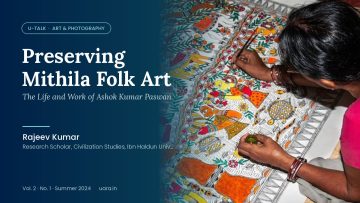
Madhubani painting and the life of Ashok Kumar Paswan, a State Award-winning Mithila folk artist from Laheriyaganj, Bihar, who keeps the tradition alive.
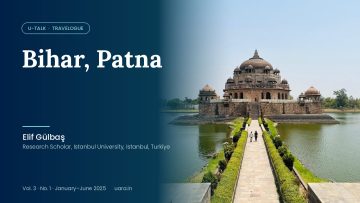
A Turkish historian's Patna travelogue: research at the Khuda Bakhsh Library, lizards in the guesthouse, lemon tea, the Bihar Museum and Sher Shah's tomb.
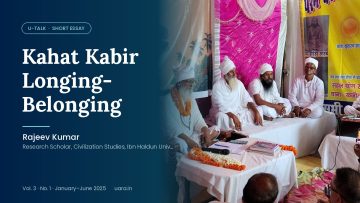
Rajeev Kumar on Kahat Kabir as a living workshop: Kabirpanth in Bihar, vernacular knowledge, gurus, bhajan singers and the longing-belonging paradigm.
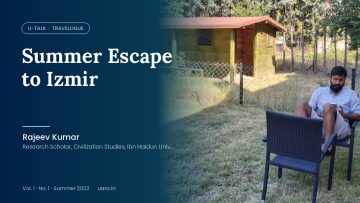
An Izmir travelogue of a summer with a Turkish family in Foca: garden work, farm breakfasts and the warmth of Turkish hospitality after a hard academic year.
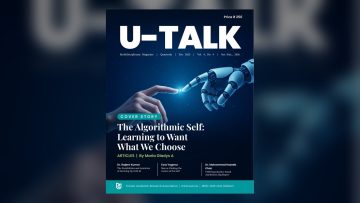
U-Talk Vol. 4, No. 4 (October-December 2026): what does it mean to be human? Read the full issue and download each article as PDF.
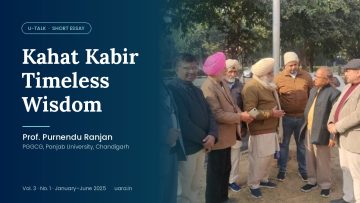
Purnendu Ranjan on Kahat Kabir: Kabir's Ek Noor sabad, his place in the Ain-e-Akbari and Guru Granth Sahib, and his timeless call for human unity.
Gujarat as India's gateway of cultural syncretism: trade, faiths, Gandhi, Parsi writers and the diaspora in Gujarati English literature and identity.