Kahat Kabir: Longing-Belonging Paradigm
 Rajeev Kumar
Research Scholar, Civilization Studies, Ibn Haldun University, Istanbul
~ 4 min read
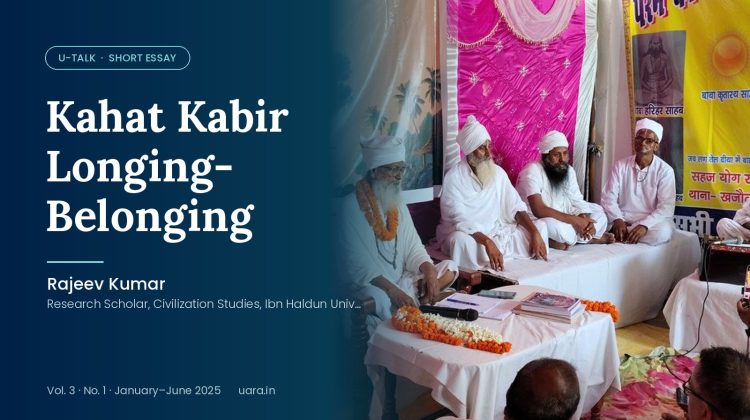
“Kahat Kabir,” the signature phrase of the 15th-century Bhakti-Sufi saint Kabir, has evolved into a significant cultural and community-building workshop in the 21st century. Deeply embedded in India’s cultural and spiritual fabric, it functions as a living cultural workshop, where people engage in discussions and activities centered around his teachings.
Kahat Kabir became the voice of laypeople, fostering cultural and intellectual expression that was previously restricted by cosmopolitan literary languages such as Sanskrit, Persian, and Arabic. These languages were often inaccessible to the common people due to their exclusivity, whereas Kahat Kabir emerged as a cultural activity of the vernacular—revolutionizing knowledge production in the Indian subcontinent through local languages. This transformation played a crucial role in elevating vernacular languages into literary mediums, a shift that Sheldon Pollock examines in his concept of the “Vernacular Millennium.”
Kabir’s words have transcended time and geography. Originating in Varanasi (formerly Banaras) in the Banarasi language, his poetry spread across the Indian subcontinent in various vernacular languages. What began as poetic expressions evolved into divine utterances and later became sacred texts, revered for generations. Today, his poetry is performed through folk traditions of singing and dancing, serving as both a spiritual and cultural expression deeply rooted in indigenous knowledge systems.
Kabir’s legacy is upheld by folk singers and Kabirpanthis (his followers), who regard his words as sacred and performative, embodying a unique blend of devotion, cultural identity, and traditional wisdom.
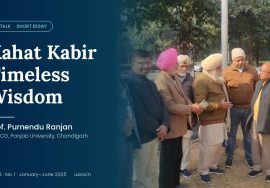
The organized community of Kabirpanth, established by Kabir’s disciples, flourished in Bihar, with Jago Das and Bhago Das playing key roles in its development. As noted by Kabir scholar Purnendu Ranjan in his historical research History of Kabirpanthi (2008), Kabirpanth remains deeply connected to place, culture, and the continuity of Indian civilization.
Unlike many other religious movements, Kabirpanth transcends sectarian divides, bridging the gap between Hindu, Buddhist, Muslim, and Christian communities. This inclusivity is rooted in Kabir’s name—derived from Arabic—and his cultural-linguistic connection to both Arabo-Persian and Indian traditions.
Kabir’s humble origins as a layman, combined with his profound cultural and spiritual influence, have made him a symbol of resistance and empowerment—particularly for marginalized communities. His teachings continue to resonate today, inspiring new generations to challenge societal barriers through the wisdom of his verses.
In 1931, the Reverend British Anglican missionary in India, Frank Ernest Keay, published his scholarly work Kabir and His Followers, which explored Kabir’s teachings—referred to as “shabad” in Kabirpanthi terminology—and their connection to Jesus’ teachings in the Christian tradition, where the biblical term “Word” carries similar significance. He noted striking parallels between Kabir’s messages and the sayings of Jesus Christ.
Kabir’s empirical approach is encapsulated in his verse:
“Tu kahata kagaz ki lekhi, main kahata ankhan ki dekhi.”
(“You speak of writing on paper, I speak of what is seen with the eyes.”)
✦This perspective resonated with progressive and rational thinkers in both India and the West. Kabir represents a unique fusion of literature, religion, sociology, and history, challenging dogma with direct experience. Historian Harbans Mukhia notes that Mughal historian Abul Fazl was deeply influenced by Kabir’s thought. By the 19th and 20th centuries, Kabir’s poetry had gained recognition as part of world literature.
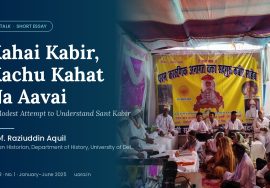
Kabirpanthis hold their gurus in high regard. The process of Diksha, or initiation, is a civilizing journey lasting three to six months, during which the guru teaches Kabirpanthis to abstain from habits, adopt humility, and lead a life of compassion. Regular community gatherings, called Bhandaras, serve as both spiritual nourishment and a space for self-reflection, where the guru ensures the followers stay on the right path. These gatherings involve the singing of Kabir’s poetry and other folk compositions created by Kabirpanth saints, forming a unique rural knowledge system.
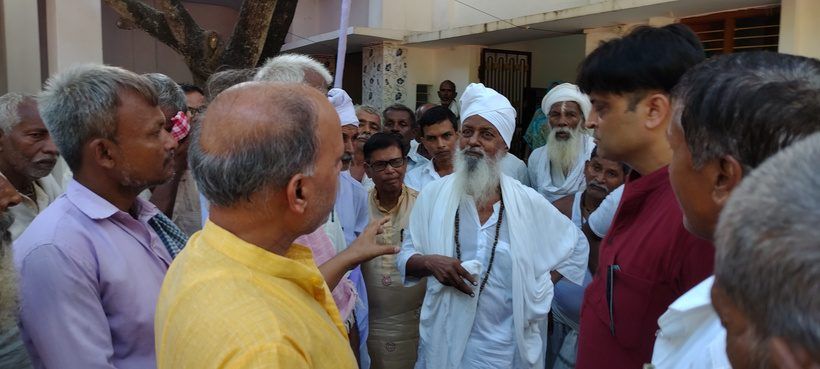
The Kabirpanthi community grants authority and legitimacy to the guru, who plays a pivotal role in guiding followers. This collective understanding fosters resistance, belonging, and a longing for empowerment among marginalized communities, helping them reclaim dignity and recognition within society.
Despite its profound influence, Kabirpanth faces critiques for developing dogmas that contradict Kabir’s original teachings. This tension between Kabir’s message and its practice can be understood through the “longing-belonging” paradigm—a framework that reflects the community’s resistance to social norms while simultaneously seeking empowerment through education, dignity, and recognition.
This collective understanding fosters resistance, belonging, and a longing for empowerment among marginalized communities, helping them reclaim dignity and recognition within society.
Consider Lakshami Dasin, an illiterate Kabir bhajan singer whom I interviewed during the “Kahat Kabir Workshop.” She shared how singing Kabir bhajans helped her find personal strength amidst familial struggles and connected her to the Kabirpanthi community. Her voice, filled with emotion, revealed how Kahat Kabir not only empowered her spiritually and socially but also motivated her to learn letters so she could read and sing Kabir bhajans herself.
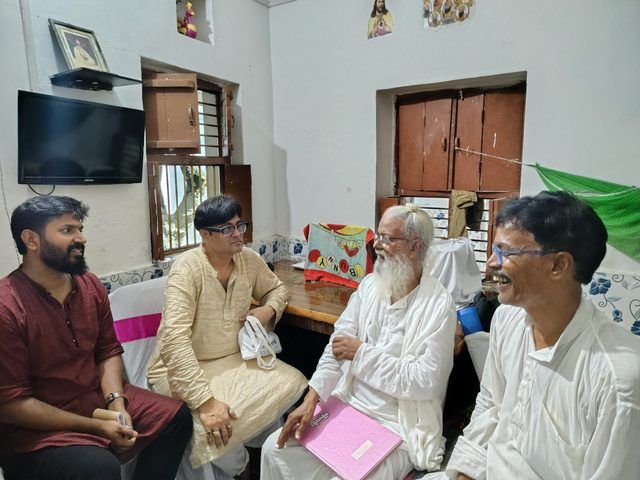
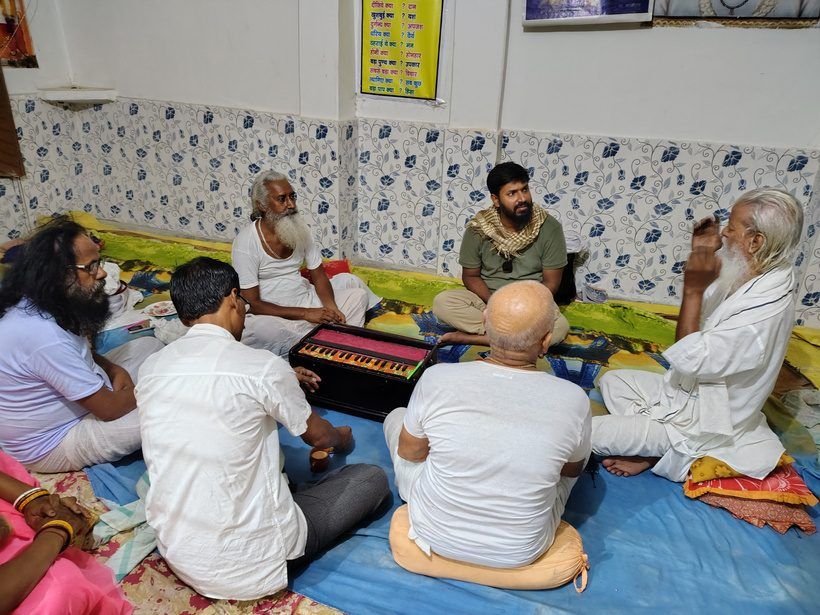
In my recent fieldwork, I met Sant Dhyanand Dhyani, a significant figure among Kabirpanthis. A guru, poet, and retired government Sanskrit teacher from Mithila, his Maithili poetry mirrors Kabir’s teachings, ensuring their continuation within regional traditions. His teachings bridge multiple religious terminologies while remaining deeply rooted in Mithila’s language and culture, making them both unique and universal.
Despite centuries of transformation, Kabir’s core message remains constant—Prem (love) and compassion. This philosophy aligns with the knowledge traditions of the Indian subcontinent and echoes the idea of Vasudhaiva Kutumbakam (“The whole world is one family”). As Kabir famously said:
“Pothi Padhi Padhi Jag Mua, Pandit Bhaya Na Koi,
Eke Akhar Prem Ke Padhe, So Pandit Hoye.”
(Reading books won’t make you wise; true wisdom comes from learning the essence of love.)
✦This Kahat Kabir longing-belonging paradigm reflects civilization, where all people equally participate in it, share it, and understand its shared essence.
Rajeev Kumar is a research scholar in Civilization Studies at Ibn Haldun University, Istanbul, Turkey.