The Wisdom of Wood
 Esra Yağmur
Master’s Student, Ibn Haldun University, Turkey
~ 3 min read
The devastation caused by the February 6 earthquakes in Türkiye and Syria shook not just buildings but confidence in modern construction. Entire neighborhoods built from reinforced concrete crumbled into debris, raising urgent questions about how we build in one of the world’s most active seismic zones. Amid this tragedy, traditional wooden architecture—long dismissed as outdated—is receiving renewed attention as a potentially life-saving alternative.
Architects and scholars across Türkiye are revisiting timber as a viable solution for earthquake-safe housing. Far from being a relic of the past, wooden structures may represent a future rooted in sustainability, resilience, and cultural continuity. While concerns about deforestation exist, experts argue that tree harvesting can be conducted responsibly without disrupting ecological balance.
The widespread collapse of supposedly strong concrete buildings revealed a stark truth: modern materials do not always guarantee safety. As architect Seda Ozen Bilgili observes, reinforced concrete dominates the construction landscape, yet its durability is not foolproof. She insists that timber, once central to Anatolian construction, still offers a compelling and adaptable model.
The widespread collapse of supposedly strong concrete buildings revealed a stark truth: modern materials do not always guarantee safety.
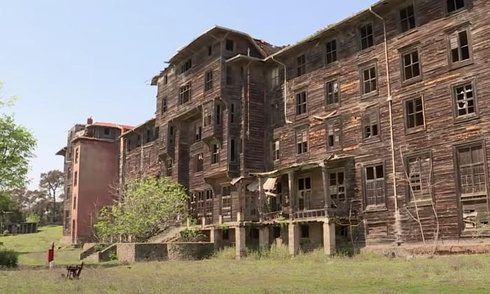
Historians and architects alike point to the legacy of Ottoman-era wooden houses—many of which survived numerous earthquakes. Architectural historian Dogan Kuban, in his seminal study of Turkish “hayatlı” (courtyard) homes, highlights how these structures were not only deeply cultural but also strategically designed for seismic zones. The Ottoman Empire even industrialized timber-based construction in the 19th century, establishing a state-run timber and joinery factory that produced prefabricated wooden housing. One example of its success is the Büyükada Greek Orphanage, Europe’s largest wooden building, which still stands firm despite having weathered major quakes.
What makes wood so promising? Its resilience, lightness, and thermal properties give it a distinct edge over materials like steel and concrete. Cross-laminated timber (CLT) structures in Japan have withstood intense seismic simulations. Unlike steel, which loses strength at high temperatures, wood chars on the outside while retaining structural integrity within—a key feature in fire safety.
Beyond safety, timber buildings offer major ecological advantages. As Bilgili notes, concrete construction produces enormous, mostly non-recyclable waste. The dust and debris often contain harmful substances like asbestos, which pose significant health and environmental risks. In contrast, wood is renewable, biodegradable, and serves as a carbon sink when managed through responsible forestry.
Experts like Prof. Türker Dündar emphasize the environmental importance of harvesting older trees to allow younger ones to absorb more carbon. When timber is used in long-lasting structures, carbon is locked in, helping mitigate climate change while promoting eco-friendly development.
This vision aligns with broader international trends. Cities like Amsterdam and Paris have launched initiatives to increase timber use in public buildings, aiming to reduce construction-related emissions. The Mjøstårnet building in Norway, currently the world’s tallest wooden structure, exemplifies what the future could look like.
In Türkiye, many rural districts still feature wooden homes—especially in areas like Beykoz, Sile, and Catalca—and they blend effortlessly into the natural landscape. Rather than being seen as old-fashioned, these structures are increasingly being recognized for their aesthetic, cultural, and environmental value.
Bilgili emphasizes that education is key. If architectural awareness is introduced early—starting even at the primary school level—future generations will be better equipped to choose sustainable and resilient building practices.
As climate change accelerates and seismic threats loom, the answer may lie not in innovation alone, but in tradition. A return to timber architecture—rooted in cultural memory and adapted with modern techniques—could offer a path to safer, greener, and more human-centered cities.
As climate change accelerates and seismic threats loom, the answer may lie not in innovation alone, but in tradition.
References & Credits
Picture source: TRT World; Büyükada Greek Orphanage photo: https://www.vecteezy.com/photo/43532921-old-greek-orthodox-orphanage-in-buyukada-island-istanbul-turkey
Esra Yağmur is a master’s student at Ibn Haldun University, Turkey.