Medina: Finding Stillness in the City of the Prophet
 Esra Yagmur
Digital News Producer, TRT World
~ 4 min read
The first days of Ramadan in 2025 marked my first journey to perform Umrah. Before dawn had faded the stars, the cool Istanbul night felt like a quiet farewell as we set out for the sacred lands. Alongside the familiar anxiety of forgetting something important came a restrained excitement, the kind that arrives when something long anticipated is finally close.
A small group of six friends boarded a plane filled with travellers from many countries, all bound for Medina al-Munawwara in Saudi Arabia.
As the aircraft gradually descended towards the airport, the landscapes of Arabia stretched out beneath us. Faded pastures, dusty plains, and sand dunes dotted with thorny shrubs formed the very image of the desert many of us had only imagined before.
When we arrived in Medina, the warm air that greeted us felt strikingly different from the climate we were used to. After leaving our luggage at the hotel, we began walking toward the Prophet’s Mosque with the guide who would accompany us throughout our journey.
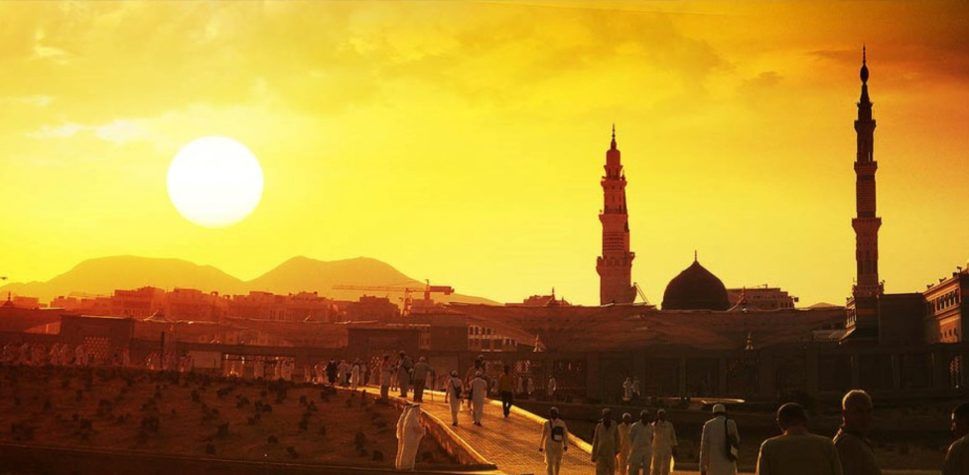
Soon, the green dome of Masjid al-Nabawi stood before us, as if quietly greeting its visitors. It is one of the three mosques regarded as the most sacred in Islam. As mentioned in the Quran, it is a mosque “founded upon piety,” honoured by the presence of the Prophet Muhammad and by the countless memories associated with him. Standing there, it felt like a jewel among the lands he once walked.
The Prophet’s Refuge: Al Balad Al Tayyiba
In his renowned account of pilgrimage journeys, the Ottoman traveller Evliya Çelebi describes the gruelling caravan routes that once stretched across deserts for weeks at a time.
Yet what impressed him most was not the hardship of the journey, but the moment when travellers finally glimpsed the dome of the Prophet’s Mosque.
“When the dome of the Prophet’s Mosque becomes visible, the believers in the caravan begin to weep. The camels, exhausted from the journey, suddenly revive and rumble like thunder; horses neigh, and mules and donkeys cry out as if in the musical mode of Segâh,” he said.
Segâh, in Turkish classical music, is a mode associated with deep spiritual contemplation, carrying a sense of noble detachment from the world. It was with a feeling like this that we approached al-Madinah al-Munawwarah.
The streets of the city were filled with people from every corner of the world, dressed in a remarkable variety of colours and garments. Yet the atmosphere felt far from chaotic.
On the contrary, there appeared to be an unspoken understanding that everyone was gathered under the same spiritual invitation, moving within the protective presence of the Prophet Muhammad.
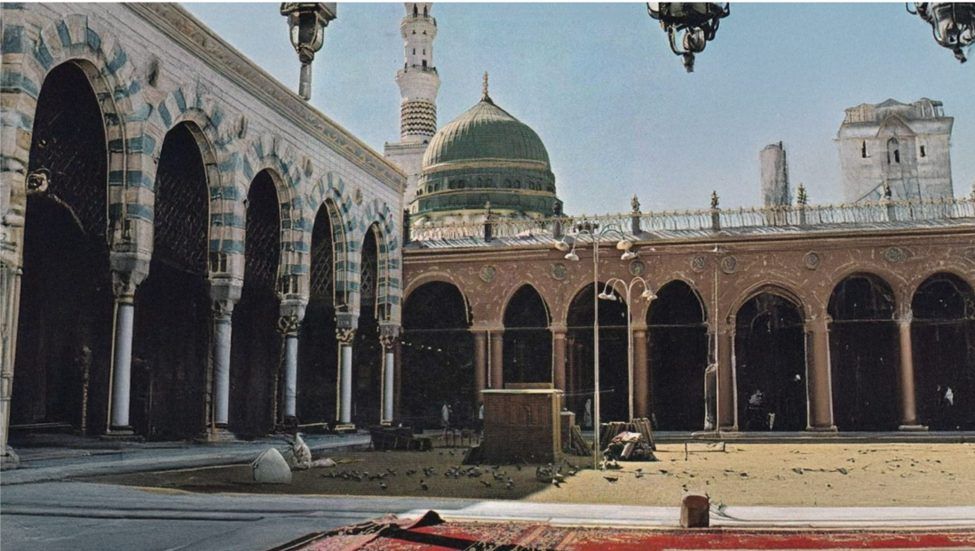
We stayed in Medina for three nights. On our first evening, we joined the long line of visitors waiting to enter the sacred chamber where the Prophet Muhammad is buried. In the faces of those standing in line, one could read the anticipation of an encounter with one of the most meaningful moments of their lives.
While waiting for our turn, we prayed in the mosque. The Prophet is reported to have said that a prayer performed in Masjid al-Nabawi is worth a thousand prayers elsewhere, except those performed in Masjid al-Haram in Mecca. Knowing this made the moment feel even more extraordinary.
Finally, we entered.
Before us lay Rawdah al-Mutahhara, the “Garden of Paradise.” The fourteenth-century traveller Ibn Battuta once wrote that this place “has been perfumed for centuries, so that its fragrance seems to rise constantly into the air”.
Despite the crowd around us, it felt as if every intermediary between the self and the Divine had vanished. In that moment, each person seemed alone before God.
Despite the crowd around us, it felt as if every intermediary between the self and the Divine had vanished.
Life in Medina moved slowly, yet with its own gentle rhythm. We spent most of our days in the mosque, often sleeping very little. This was not merely a place of ritual, but a living reflection of the Quranic verse: “For every nation there is a direction to which they turn” (Surah Al-Baqarah, 2:148).
People from every culture prayed according to their own traditions. Some remained in long prostrations. Others recited the Quran in soft murmurs. Some sat in contemplation facing the resting place of the Prophet. Others lay quietly on the green carpets, resting within the calm of the mosque. Here, whatever one did seemed to become a form of worship.
On our final evening in Medina, my heart was divided. I carried both the excitement of soon encountering the Kaaba and a quiet sadness at leaving this city behind.
Visiting Medina is not a formal requirement of Umrah. Yet once you are there, you come to understand the meaning of the city that once offered refuge to the Prophet after his migration from Mecca. After that migration, he named it Taybah, the good and pure city.
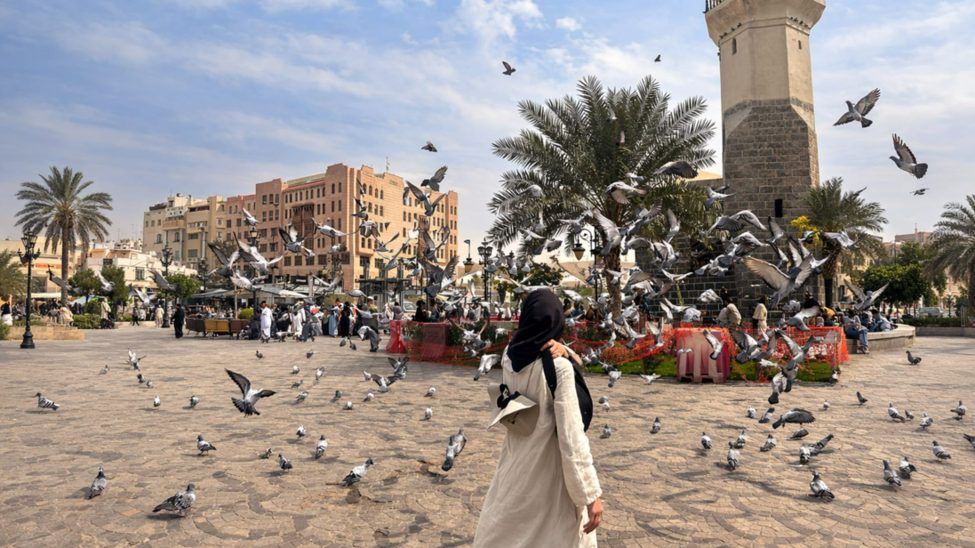
For more than fourteen centuries, Muslims have journeyed here, once a collection of scattered villages called Yathrib, transformed by revelation into Madinat al-Nabi, the City of the Prophet.
Standing there, I realised I had become part of a procession that stretched back centuries. It felt as if the Prophet’s presence still lingered across every corner of the city, not as memory alone but as something quietly lived.
Our guide’s words returned to me:
“We see the effects of the Prophet’s blessing prayer for this place. The finest fruits and vegetables from around the world are still brought here.”
Medina, once a collection of scattered villages called Yathrib, had become Madinat al-Nabi, the City of the Prophet. And as I prepared to leave, I understood that the city does not simply host visitors; it absorbs them into its continuity.
The city does not simply host visitors; it absorbs them into its continuity.
Leaving Medina did not feel like departure so much as carrying its stillness forward into what came next.
Esra Yagmur is a Digital News Producer at TRT World. She writes feature articles on culture, history, art and comparative civilizations.