Time in Exeter
 Rajeev Kumar
Research Scholar, Civilization Studies, Ibn Haldun University, Istanbul
~ 8 min read
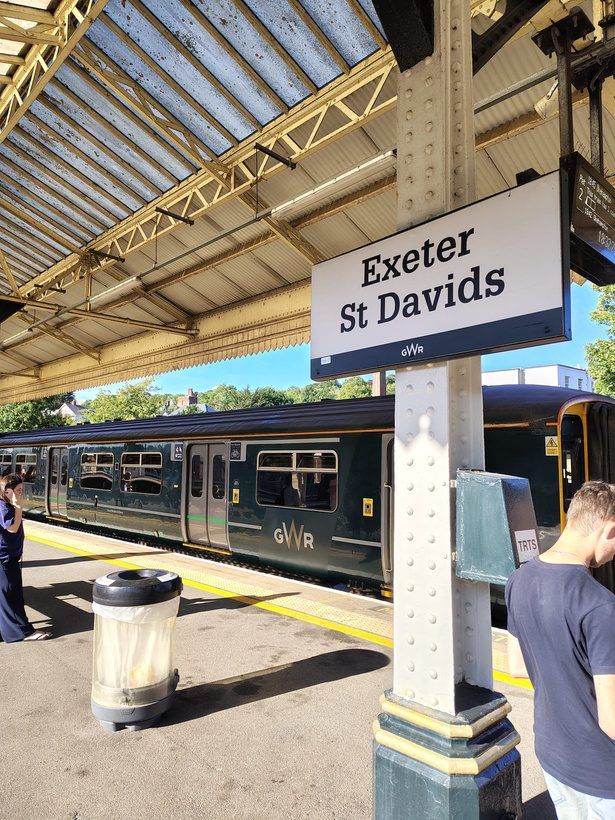
Exeter St David Station
I got off at Exeter St David Station, and from there I had to quickly catch another train to Exeter Central. But I didn’t realise it in time, and I missed it by just a few seconds. Then I asked a guard at the station if I could take the next train without paying again. She said yes; I didn’t have to pay again, and the next train would arrive in 15 minutes. She was kind.
I got the chance to experience St David Station. It was beautiful, and especially on the day I landed in the UK, the weather was so pleasant, unlike anything I had ever experienced. It was cool and sunny.
Exeter Central Station and Exploring the City
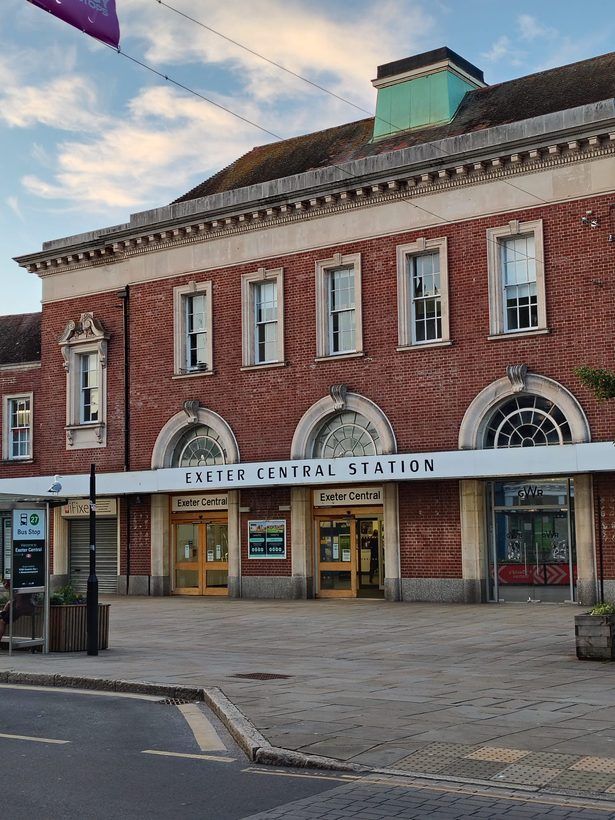
After 15 minutes, I caught the train to Exeter Central Station. Once I got out, I felt I had entered the heart of the city. I was so excited, saying to myself, “I am in the UK, in Exeter!”
My hotel was just two minutes away from the station, and since it was 6 PM, I wanted to walk around the city and also see the river. The first place I encountered was Exeter College. It was beautiful and had no boundary, so the whole city looked like part of the college.
On the way, I met a brother from Saudi Arabia. He guided me to a halal café named Fireaway. He said it had the best pizza. Then he told me how to reach the river. I followed his directions and went into the café, where I met two South Asians—one from Haryana (India) and the other from Dhaka (Bangladesh). Bengali music was playing in the café.
I asked them which pizza they recommended, and one of them said, “Go with the Asian pizza.” I bought the pizza for £12 and headed to the river. I sat on the stairs by the river, ate my pizza, and then started walking along the riverside.
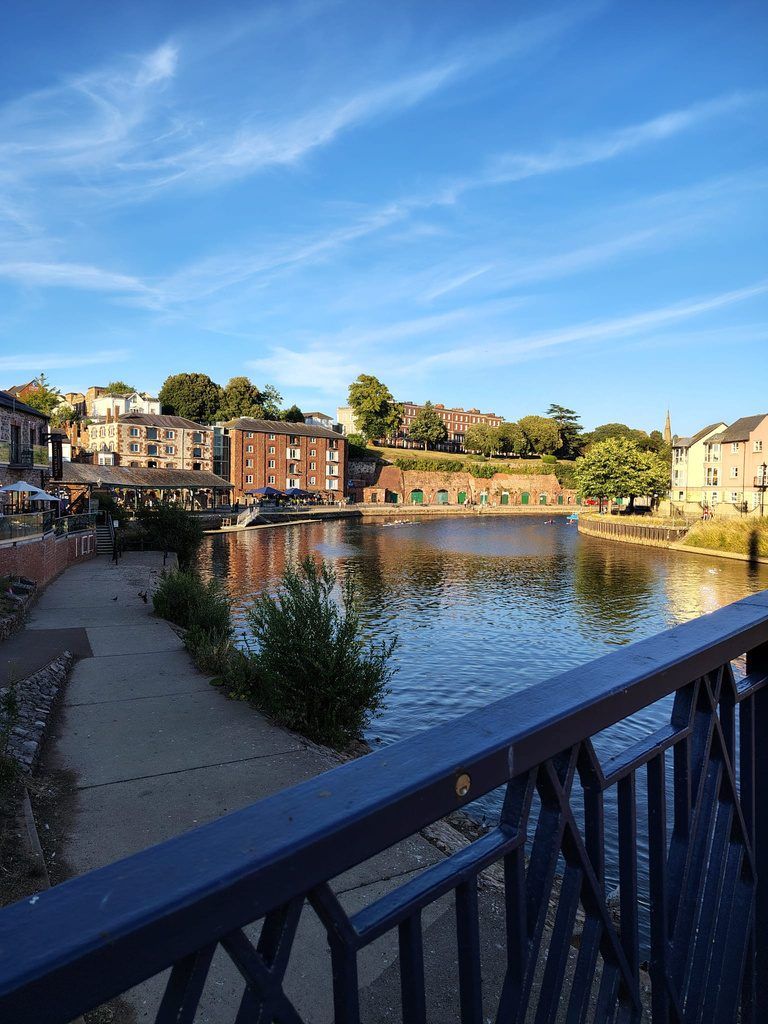
There were beautiful cafés and pub-style seating areas along the river. Some people were boating, and others were doing some kind of exercise in the water. The riverside pubs looked so romantic and beautiful for the evening. Although I don’t drink, I could still appreciate their culture and social life.
I kept walking along the river—it was stunning. Eventually, I crossed the river via a bridge and went to see a tall and majestic church: St Leonard’s Church, Exeter. After that, I returned to my hotel.
Queens Court Hotel
The hotel was gorgeous. It was my first time staying in a typical British-style house and room—small and well maintained. In the morning, I came to the lobby for breakfast. It was very warm and cozy—like a beautiful café. I met some of the participants who had come for the workshop.
Two people were working at the hotel: Eric, the senior manager, and a beautiful young girl. Both were gentle and very professional. I asked for an English breakfast. When it came, I realised it was not halal. So I asked if it was halal. She said no and was ready to change it. Then she replaced it with a cutlet and vegetarian sausage. That breakfast was amazing. The egg was like a poached one. The girl was very charming, with very positive energy, and never got irritated. The hotel did not feel like a hotel but like a home.
The most shocking experience I was about to encounter was related to the toilet. There was no bidet or water gun to clean after using the toilet. This was a cultural shock for me. I had to immediately take a shower after using the toilet and make sure I was completely clean. This became a concern—I could only use the toilet at the hotel. Because this was normal in the UK: water is not used for cleaning; rather, they use toilet paper.
However, I could not understand their logic. They could easily attach one pipe to the toilet seat, as is done in the Eastern version of the Western toilet. I was also wondering—at least the British could have learnt this from South Asia. Or perhaps it was their arrogance. This might be my sarcastic, civilised joke.
University of Exeter and Workshop
Kumail Rajani, the coordinator of the workshop, came at 8:10 AM to take us to campus, and he was very punctual. I was still having my breakfast, and when I went up after breakfast to pick up my stuff, they had already left for the campus. So I had to go to campus on my own. It was 20 minutes away from the hostel.
I started heading to the campus, and then I noticed a road that led into the campus, where I saw a sign for the University of Exeter. I clicked a photo with it for my father and then moved to the workshop building. The campus was a bit hilly, so its roads reminded me of Jawaharlal Nehru University, where I first graduated. The campus was very similar to JNU—green, the buildings were similar in nature, and the landscape was hilly.
An intriguing thing about Exeter was that there was no guard or boundary on the campus. The campus was incorporated into the city, and the city was like an expansion of the campus. Buildings were not dominating humans; rather, they were more accommodating and conversing.
Buildings were not dominating humans; rather, they were more accommodating and conversing.
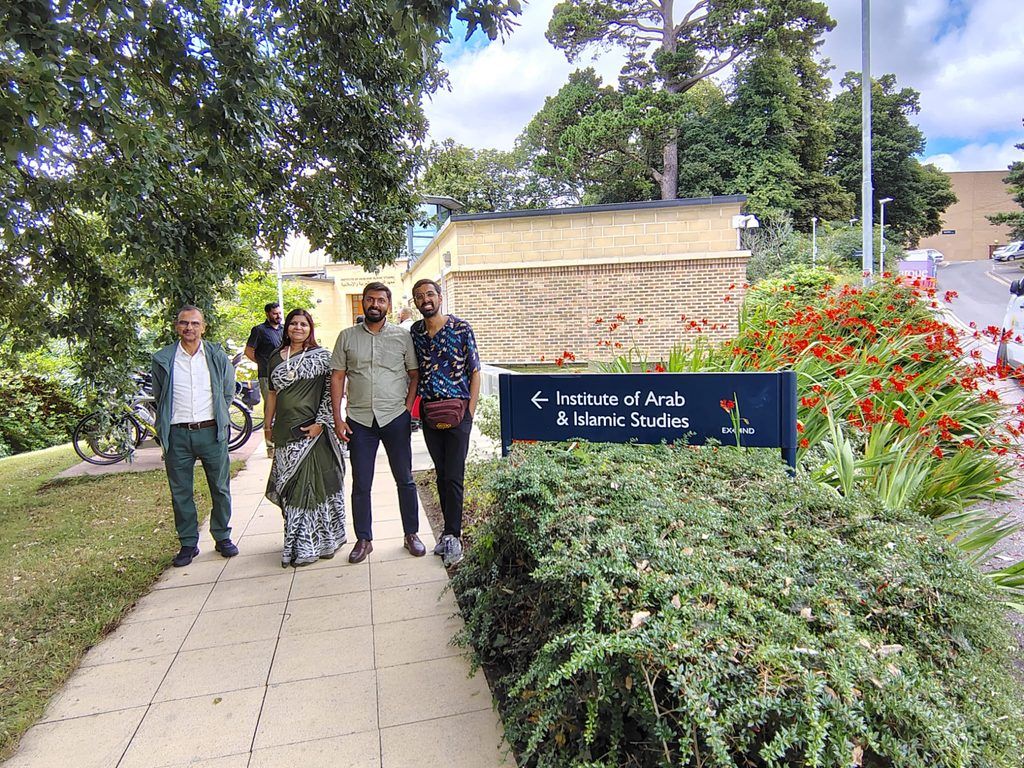
The workshop was very well structured, so it did not cause too much stress and went smoothly. It was more engaging and lively, where everyone could speak enough and engage with the subject matter. Thanks to Kumail—he was very calculative. He had arranged everything so well. He also took us to his department, the “Institute of Arab and Islamic Studies”, which is now one of the strongest and richest, funded by Sharjah’s Sheikh Sultan Bin Muhammad Al-Qasimi. He graduated from Exeter and later provided funding for the university. It has one of the most crowded PhD communities with students from various countries. Now, 40 million dollars has been allocated for its expansion.
The workshop was on syncretic traditions in South Asia, more focused on the Bhakti–Sufi movement. In the workshop, I felt a sense of connection—one organiser had invited us and provided an address in Exeter for the convention, while we all came from different places on our own, eager to create, learn, exchange, and expand. It evoked a sense of historic nostalgia—perhaps in the past, the education system functioned in this way, or for the Sufi and Bhakti communities, it resembled a spiritual mela. As Bulleh Shah expresses in his poetry: “Chal mele nu chaliye, akhir jana mar ve, chal mele nu chaliye.” We all had come to this mela.
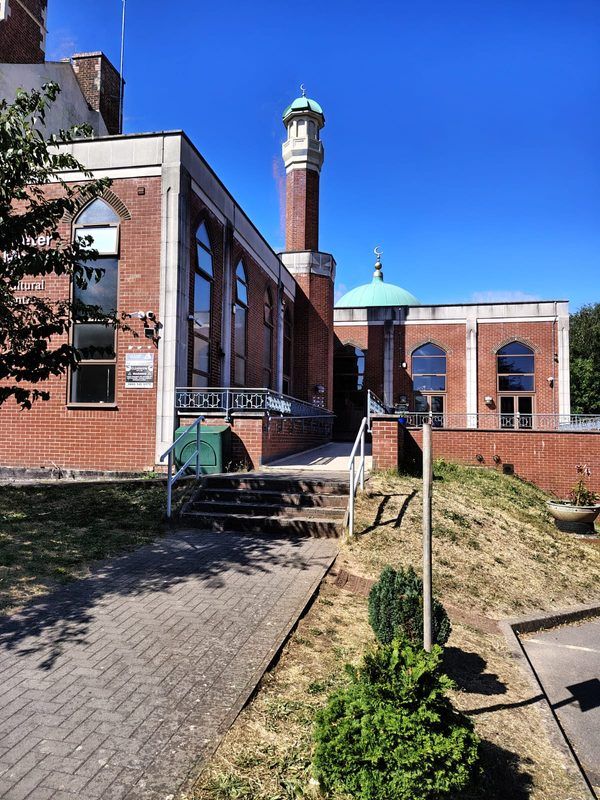
Exeter Mosque
Exeter, in contrast to London, was smaller, quieter, and hillier. The architecture was aged and poetic: stone houses, narrow lanes, and grand churches. The Roman wall, which was built in 200 AD, was still standing and was well incorporated into the city with modern space. This was reminiscent of the “good old Roman” era, a connection between Istanbul and Exeter.
I wanted to see a mosque in the UK, and thankfully, I met a new friend, Abdullah from Palestine. He was an amazing person; he took me around the city after we both visited Exeter Mosque.
He told me how it started as a small building for a few worshippers. But over the years, the Muslim population grew so much that a larger mosque was built next door, three floors, including one just for women. Now even those floors aren’t enough. During busy times, the backyard fills up with worshippers. The mosque’s managing committee is mostly Bengali, and they’ve even created a small residential complex to generate income for its upkeep. The Muslim diaspora here isn’t just surviving, it’s flourishing, growing, and self-sustaining.
Encounters with Jim, the Holy Soul
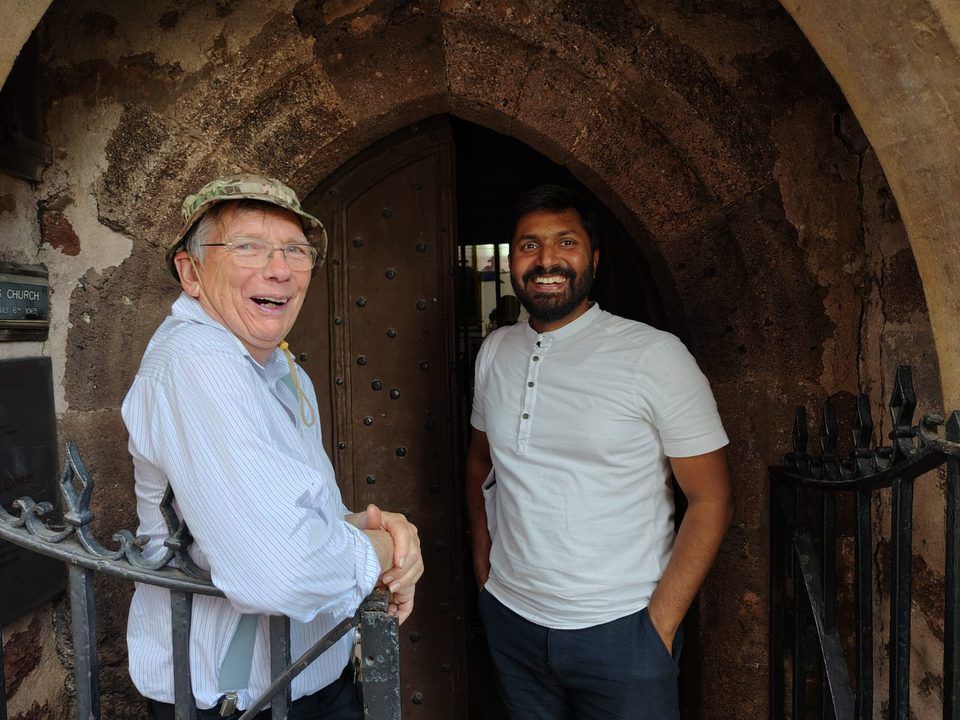
We visited a centuries-old church, built in the 11th century. It was already closing, but the priest, Jim, a gentle old man perhaps in his 80s, opened it just for us. Inside, I could see some angel idols on the walls, paintings, praying benches and desks, the priest’s seat, and something written on tiles glued to the wall—I could not read them. I just clicked pictures, looked around, and tried to feel the space.
I came out and wanted to have a picture with Jim and thank him. I asked him if we could click a photo together. He said softly, “No,” and then added, “because your camera will crack.” We burst into laughter. It was a beautiful moment. While saying farewell, we shook hands, and I also kissed his hand out of respect for his gentleness. “May God bless you and give you much health,” I said. “And you too,” he smiled back. It was a quiet, holy moment.
Exeter Cathedral
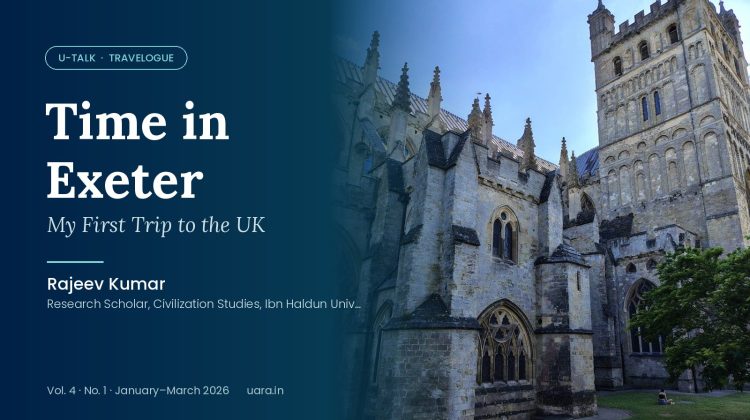
In contrast to Jim and his small church, there was a massive cathedral. We went there—there was some event going on, and music was coming from inside. We just got through the gate and clicked a picture of the arches. But immediately, a guard stopped me. This place was of the elite, and it reminded me of how some temples do not allow everyone. Even people’s faces in this cathedral were frowning—not looking pleasant or welcoming.
My eyes were wide open seeing the arches inside the cathedral. It was sublime. I was stunned by the gothic arches, stained glass, and sheer vastness. I had only seen such beauty in books or photos. Even the outside of the cathedral was so massive, mystic, and dramatically tall. Then I realized how buildings dominate—how they create power. I must now visit the Sistine Chapel and Basilica in Vatican City—that must be amazing.
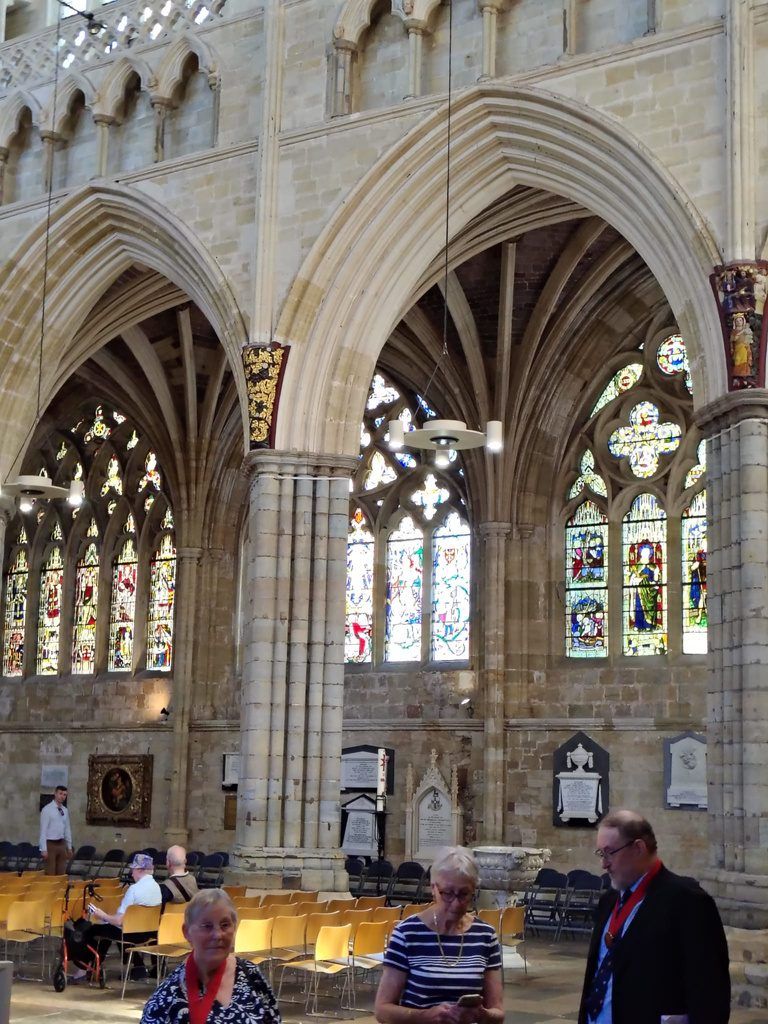
The cathedral stood tall and commanding. It wasn’t just about size; it was about intent, detail, and presence. I could see statues of saints, elaborate arches, massive doors—architecture that seemed to speak. These were not just religious spaces; they were declarations of history and power.
My Reflection
Despite the colonial history and the pain of the past, I had to admit: the British had used their wealth to build something lasting. I didn’t see beggars. The infrastructure was strong. The city was clean. And the diaspora—Muslim, South Asian, African—was not only present but also had a political voice. That struck me.
I have many more stories to tell. This journey was not just about a paper presentation; it was about encountering the world and recognizing how far I have come—from a village boy with dreams to a thinker walking among cathedrals, coffee shops, and mosques in distant lands. This isn’t the end! The story of London continues in the next issue. Till then, bye!
From a village boy with dreams to a thinker walking among cathedrals, coffee shops, and mosques in distant lands.
Rajeev Kumar is a research scholar in Civilization Studies at Ibn Haldun University, Istanbul, Turkey.