Why the Traditional Diet Is Still the Best Medicine for Indians
 Dr. Mohammed Haseeb Khan
Researcher, Brain Tumor Laboratory, BILSAB, Bezmialem Vakif University
~ 5 min read
My grandmother never used the word antioxidant. She certainly never talked about the gut microbiome. If you had asked her what keeps a family healthy, she would probably have said something much simpler: eat what is fresh, eat what is in season, eat a variety of things, and don’t overcomplicate food.
Funny enough, modern nutrition research often arrives at a similar place, just with many more syllables. We have spent years being told that healthy eating requires expensive “superfoods,” imported seeds and supplements. But much of what we need has been sitting in our own kitchens all along: dal, vegetables, seasonal fruit, whole grains, curd, nuts, spices and simple home-cooked meals.
The problem is not that traditional food has disappeared completely. It is that packaged snacks, sugary drinks, refined flour and fast food are increasingly replacing it.
Think about a traditional Indian meal. It may contain dal, a seasonal sabzi, rice or roti, some curd and perhaps a little salad or pickle. It is not perfect by definition; traditional diets can also be heavy in oil, salt or refined carbohydrates, but the basic structure can be remarkably balanced.
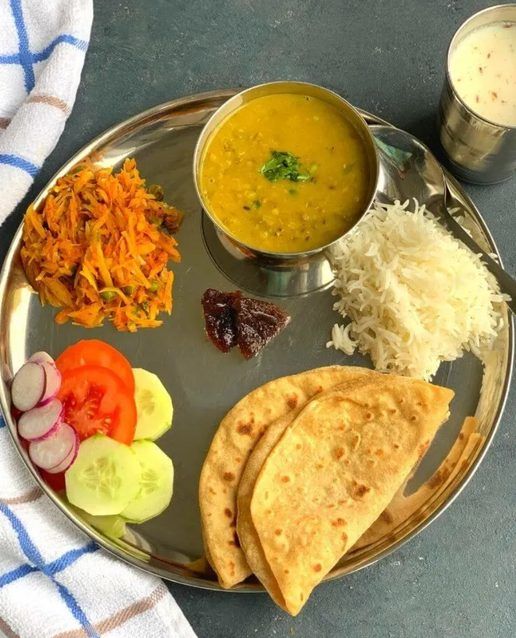
Dal and other pulses provide plant protein, fiber, iron and folate. Vegetables add fiber, vitamins, minerals and a wide range of plant compounds. Whole grains provide more fiber than highly refined alternatives. Curd (Yoghurt), milk, and other dairy foods provide protein, calcium, and B12, and fermented dairy may also support gut health, while eggs, fish, soy, nuts, and seeds offer good alternatives for those who prefer not to rely on dairy.
None of this requires a supermarket full of imported products. Take the humble dal. Masoor, moong, urad, toor, chana, rajma and chickpeas are ordinary foods in India, but nutritionally they are anything but ordinary. Regularly eating pulses can support heart health, blood-sugar control, and digestive health.
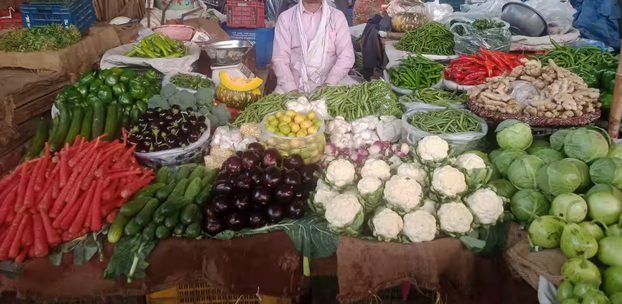
Then there are vegetables: lauki, pumpkin, bhindi, karela, spinach, methi, cauliflower, cabbage, carrot, radish, tomato and countless regional varieties. Eating different vegetables throughout the week gives the body a wider range of nutrients and plant compounds. And then comes fruit.
A mango in summer, guava in winter, papaya or banana any day of the week, amla, jamun, oranges, or whatever happens to be available at the local fruit stall, that is already a good beginning. We do not need to turn every fruit into a nutritional project. Eating fruit regularly is more important than finding the “perfect” fruit.
The same principle applies to grains. Atta, rice, millets, and oats can all have a place in a balanced diet. What matters is variety, sensible portions, and choosing whole or minimally processed options more often than refined ones.
Food Is Only Part of the Story
Our grandparents also had something that many of us have lost: movement built into everyday life.
They walked to the market, climbed stairs, worked in the fields, swept the courtyard, carried things, cooked, gardened, spending far less time in front of screens than we do today. They may never have called it “physical activity,” but their bodies knew what it was.
Modern life has made movement optional, and that is not always good for us. We do not necessarily need an expensive gym membership. A brisk walk, cycling, yoga, gardening, dancing, household work or simply taking the stairs can all help. Thirty minutes of movement on most days is a realistic place to start.
And then there is sleep.
We often treat sleep as something we sacrifice when life gets busy. But the body needs sleep to recover, regulate hormones, support immunity, and maintain metabolic health. For most adults, roughly seven to eight hours of regular sleep is a reasonable target.
In other words, health is not created by food alone. What we eat, how much we move and how well we sleep all belong to the same story.
Perhaps We Need to Make Food Simple Again
That does not mean everything traditional was automatically healthy, nor that imported food is automatically bad. It simply means that we do not need to look elsewhere for every answer. A healthy diet does not have to be fashionable. It can be a bowl of dal. It can be seasonal vegetables cooked at home. It can be fruit bought from the neighbourhood vendor. It can be curd with rice, roti with sabzi, or khichdi on a quiet evening. It can also include eggs, fish, chicken, nuts, seeds, soy or other sources of protein, depending on one’s preferences and needs.
A healthy diet does not have to be fashionable. It can be a bowl of dal.
There is something else worth remembering about traditional Indian food: it was deeply connected to place and season. The sabzi bought from the local mandi, the fruit that appeared when it was in season, the grain grown in the region, the dal cooked differently from one household to another – food was local, varied and closely tied to everyday life.
The point is not to recreate our grandparents’ diet exactly. It is to recover the principle behind it: eat a variety of real foods, mostly in their simple form, and let food be part of a balanced life rather than a constant search for the next miracle ingredient.
Going Back to the Basics
Perhaps that is what we have forgotten. My grandmother and many others of her era did not know what a microbiome was. She did not know how antioxidants worked. She did not read nutrition labels or count grams of protein.
But she knew when vegetables were fresh. She knew which fruits belonged to which season. She knew that dal belonged on the table, that food should be varied, and that the body needed rest.
Modern science has given us better language for understanding many of these habits. But it has not made the wisdom of the kitchen obsolete.
If anything, it reminds us of something rather simple: health does not always begin with something new. Sometimes, it begins with remembering what we already knew.
Health does not always begin with something new. Sometimes, it begins with remembering what we already knew.
A walk instead of another hour of scrolling. A seasonal fruit instead of a packaged snack. Dal instead of another instant meal. A home-cooked plate instead of another delivery. Going to bed instead of watching one more episode.
None of this is revolutionary. And perhaps that is precisely why it matters. For many Indian families, good health is still within reach, not in an expensive bottle or a fashionable superfood, but in the sabzi mandi, the kitchen, the dining table, the morning walk and, finally, a good night’s sleep.
Dr. Mohammed Haseeb Khan is a researcher at The Brain Tumor Laboratory, BILSAB, Bezmialem Vakif University, Istanbul, Turkey.